

10 Myths About Skydiving You Still Believe
- Published by:Skydive Swahili
- September 3, 2025
10 Myths About Skydiving You Still Believe
Let’s clear the air (literally). These skydiving myths? Busted.
Introduction: Don’t Believe Everything You Hear
For a sport that’s been around for over 100 years, skydiving is still surrounded by more myths than facts. From parachute failures to “not being able to breathe in freefall,” we’ve heard it all — and we’re here to set the record straight.
Whether you're nervous about your first jump or trying to convince a friend to take the plunge with you, here are the 10 biggest skydiving myths we hear at Skydive Swahili — and the facts that debunk them.
1. Parachutes Often Fail
Truth: Modern tandem systems are built with multiple layers of redundancy. At Skydive Swahili, every tandem rig includes a main parachute, a reserve parachute packed by a certified rigger, and an Automatic Activation Device (AAD) that can deploy the reserve automatically if needed.
We use tandem equipment from United Parachute Technologies (UPT), widely recognized as the leading manufacturer of tandem skydiving systems and trusted by drop zones worldwide.
2. You Can’t Breathe in Freefall
Truth: You can breathe normally during freefall. The air moves quickly, but it’s perfectly breathable at our jump altitudes.
Pro tip: Focus on your breathing—inhale calmly, exhale steadily, and keep your abdomen relaxed. Intentional, rhythmic breathing helps release tension and makes the experience smoother and more enjoyable.
First‑timer prep tips: How to Prepare for Your Skydive in Kenya.
3. Skydiving Is Too Dangerous
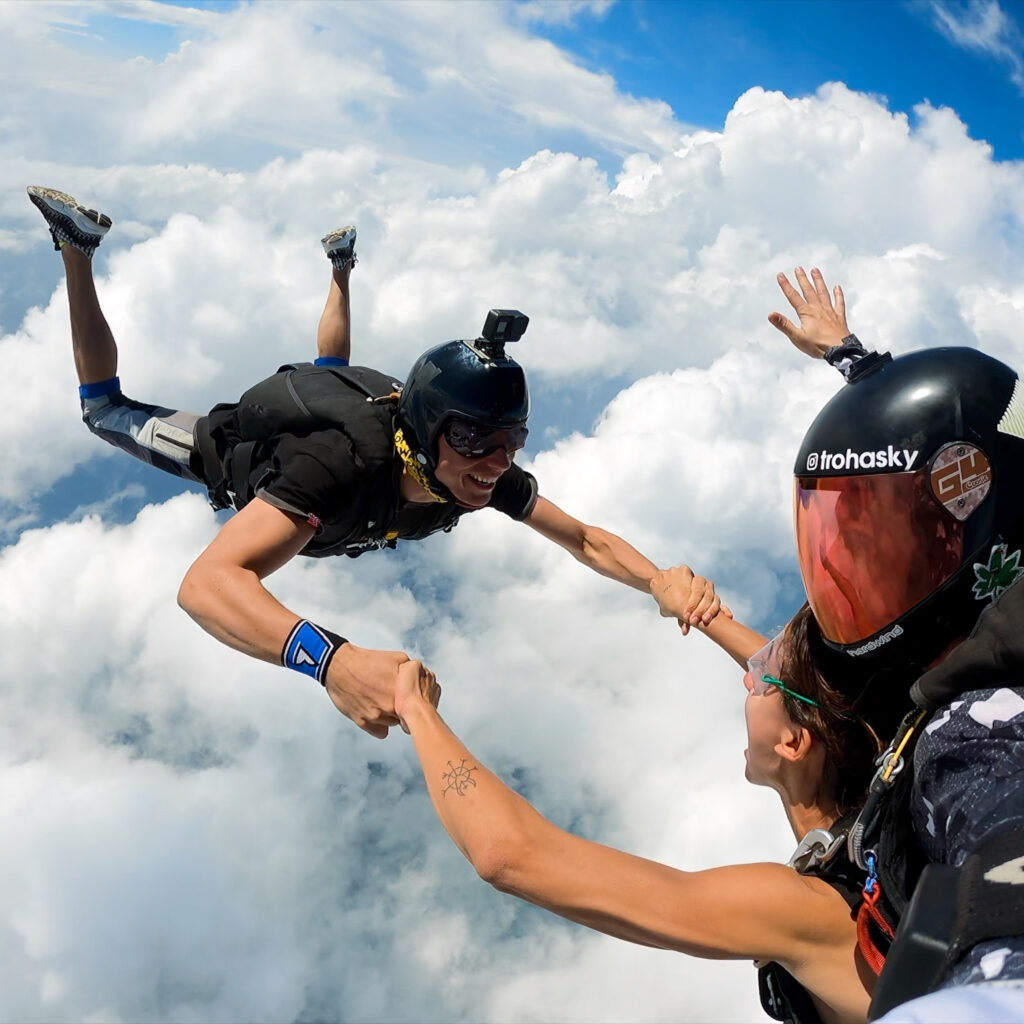
Truth: Tandem skydiving operates at a very low risk level. USPA’s published tandem fatality rate is approximately 0.003 per 1,000 jumps (USPA Safety FAQ).
For the sport overall, Parachutist magazine reports that in 2024 there were nine U.S. skydiving fatalities across about 3.88 million jumps—an index of 0.23 per 100,000 skydives, a historic low (Parachutist 2024 Fatality Summary).
4. Skydiving Is Only for Young People
Truth: At Skydive Swahili, the minimum age is 12. For participants aged 12–17, a parent or legal guardian’s consent and on‑site presence with ID are mandatory.
There’s no official upper age limit. If you’re healthy and meet basic guidelines (see our health & preparation guide), you can skydive. In August 2024, Manette Baillie, aged 102, became Britain’s oldest skydiver—proof that adventure has no age cap (BBC News).
5. You Need to Be an Athlete to Skydive
Truth: You don’t need to be super fit or athletic. Many people with disabilities—including amputees or paraplegic individuals—have made tandem skydives with appropriate equipment adaptations and planning.
For those without disabilities, the threshold is very low. Try this quick self‑test:
- Sit on the edge of a chair.
- Keep your spine straight and head upright.
- Lift both legs together—without using your arms—until your knees are about level with your chest.
- Hold for roughly 10 seconds.
✅ If you can do this, you’re fit enough for a tandem skydive.
6. The Parachute Opening Will Hurt
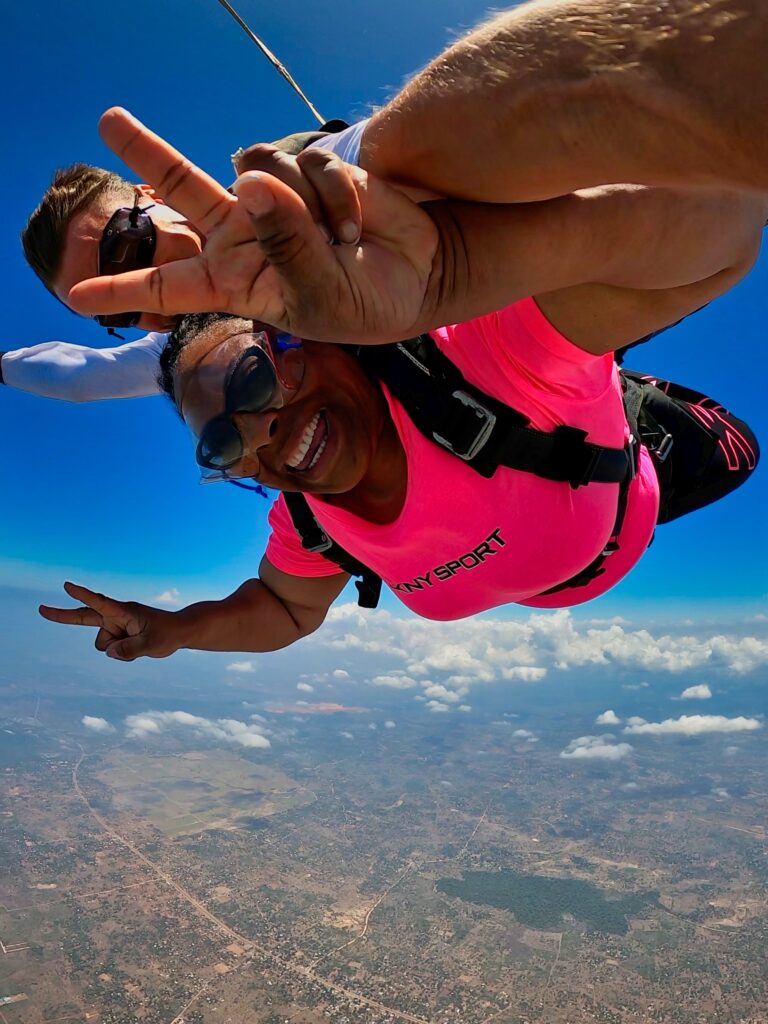
Truth: Modern parachute designs and deployment techniques make openings smooth and controlled. Most people describe the transition from freefall to canopy ride as a gentle slowdown, not a painful jolt.
6. The Parachute Opening Will Hurt
Truth: Modern parachute designs and deployment techniques make openings smooth and controlled. Most people describe the transition from freefall to canopy ride as a gentle slowdown, not a painful jolt.
7. You Might Land Hard
Truth: Tandem instructors are trained to perform soft, controlled landings—often sliding in on Diani’s soft sand. With proper technique, landing incidents are rare.
8. You Can Take Your Camera with You
Truth: For safety, tandem passengers don’t carry cameras or phones during the jump. Your instructor or dedicated videographer captures it all, from gear‑up to beach landing, with our professional photo + video packages.
9. Weather Never Cancels Jumps
Truth: Skydiving is weather‑dependent. Strong wind, low cloud, or rain may pause or reschedule operations—safety first. If your jump can’t proceed, we’ll rebook you (typically with up to 12 months to reschedule).
10. Once You Jump, You’re on Your Own
Truth: In a tandem skydive, you’re attached to a licensed instructor from takeoff to landing. They manage exit, freefall, parachute deployment, navigation and landing—so you can focus on the experience.
Final Word
Skydiving myths often come from outdated ideas or exaggerated fears. The truth is that modern equipment, professional instructors, and strict safety standards have made skydiving—especially tandem skydiving—an accessible and safe adventure for almost anyone.
Ready to see for yourself?
Still have questions? Contact us
