

Is Skydiving Safe? The Facts and Systems Behind the Jump
- Published by:Skydive Swahili
- August 19, 2025
Is Skydiving Safe? The Facts and Systems Behind the Jump
Skydiving is often seen as the ultimate adrenaline rush — and for many, that excitement comes with questions about safety. At Skydive Swahili, we believe in total transparency. This guide explains the facts, safety systems, and professional standards that make tandem skydiving one of the safest adventure sports in the world.
New to the sport? Start with our overview: Skydiving in Kenya – Everything You Need to Know
1. The Numbers Behind Skydiving Safety
For tandem skydiving, USPA’s published risk rate is extremely low—about 0.003 fatalities per 1,000 tandem jumps, reflecting the added layers of instructor oversight and equipment redundancy (USPA Safety FAQ).
Looking at the sport overall, Parachutist magazine reports that in 2024 there were nine U.S. skydiving fatalities across approximately 3.88 million jumps—an index rate of 0.23 per 100,000 skydives, the first single‑digit year on record and a milestone for the sport (Parachutist: 2024 Fatality Summary).
Together, these data points show that with licensed professionals, modern gear and strict procedures, skydiving—especially tandem—operates at a very low level of risk.
2. The Role of Professional Instructors
At Skydive Swahili, every tandem jump is conducted by an instructor who meets or exceeds global certification requirements. Our instructors:
- Hold valid tandem instructor ratings recognized internationally
- Complete regular re-certification and safety training
- Have thousands of jumps’ worth of experience
- Pass ongoing medical and fitness assessments
We follow safety practices in line with Kenya Civil Aviation Authority (KCAA) regulations and industry best practices from the USPA and other governing bodies.

3. Equipment Safety Features
At Skydive Swahili, your safety is backed by the best technology in the industry. We exclusively use tandem gear from United Parachute Technologies (UPT), the world’s leading manufacturer of tandem skydiving equipment. Their Vector tandem systems are trusted globally for their reliability, innovation, and proven safety record.
Each tandem rig is built with multiple layers of redundancy, including:
- Main parachute: Deployed by your instructor during freefall.
- Reserve parachute: Professionally packed and sealed by a certified rigger.
- Automatic Activation Device (AAD): A backup system that deploys the reserve automatically if needed.
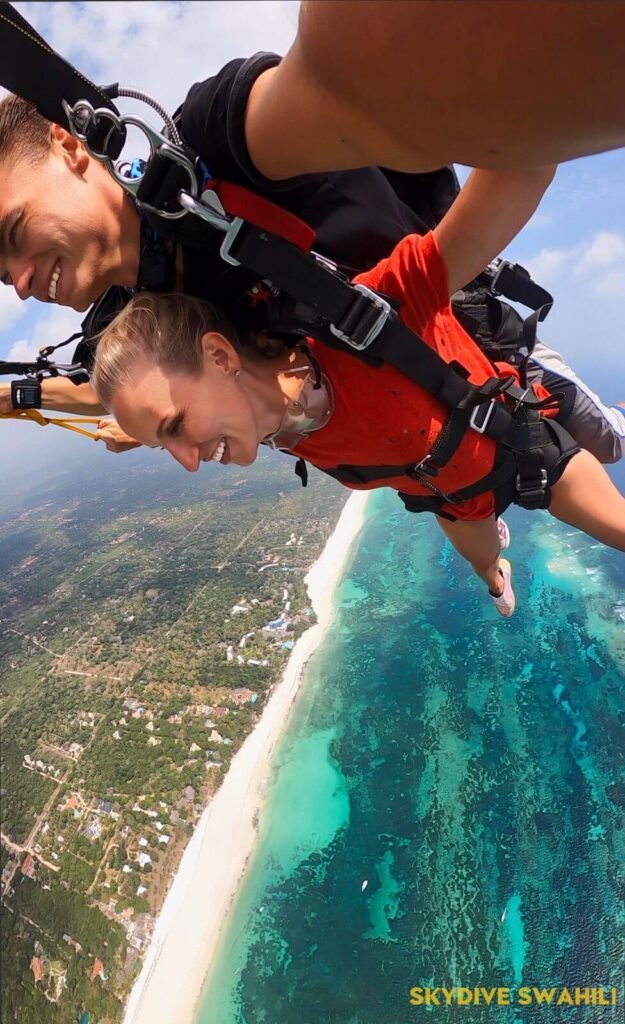
- Dual harness system: Keeps student and instructor securely connected throughout the jump.
All gear is inspected daily and maintained according to both UPT’s strict standards and international best practices to ensure the highest level of safety on every single skydive.
4. Aircraft Maintenance & Safety
The jump aircraft is as critical to safety as the parachute system. Our aircraft are maintained in accordance with Kenya Civil Aviation Authority (KCAA) requirements and manufacturer guidelines. They receive regular inspections, including:
- Daily pre-flight checks by the pilot
- Scheduled maintenance at approved facilities
- Strict adherence to safety bulletins and service updates
All flights are operated by licensed, experienced pilots familiar with skydiving-specific flight profiles and procedures.
5. Weather Standards
Skydiving is weather-dependent, and we never compromise on safety for the sake of schedule. Jumps may be paused or rescheduled for:
- Strong winds above our operational limits
- Low cloud ceilings
- Rain or poor visibility
If your jump is delayed or rescheduled, you’ll have up to 12 months to rebook. For the most reliable weather, morning slots are often best.
6. Passenger Responsibility
Safety is a shared responsibility. As a tandem passenger, you should:
- Follow your instructor’s pre-jump briefing and instructions
- Wear appropriate clothing and secure footwear
- Inform us of any health conditions before booking
- Avoid alcohol or drugs before your jump
These simple steps ensure you get the most from your experience while helping maintain safety standards.
7. Related Reading & Next Steps
- Skydiving in Kenya – Everything You Need to Know
- Tandem Skydiving – The Ultimate First Jump
- How to Prepare for Your Skydive in Kenya
- 10 Myths About Skydiving You Still Believe
Ready to book? Visit book.skydiveswahili.com.
Still have questions? Contact us here.
